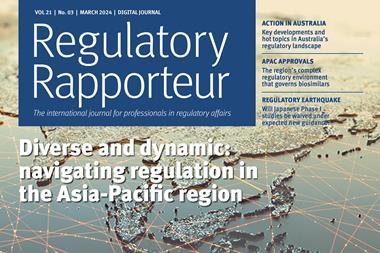















Regulatory Rapporteur
March 2024 | Volume 21 | No.3
Licence notice
Copyright © 2015-2024 The Organisation for Professionals in Regulatory Affairs Ltd. T/A Regulatory Rapporteur − All Rights Reserved. This work is licensed to Allison Gillespie for the purposes of academic and personal reasonable use only.
Notwithstanding this licence, no part of materials published in Regulatory Rapporteur may be reproduced without the express written permission of the publisher.
As a general rule, permission should be sought from the rights holder to reproduce any substantial part of a copyrighted work. This includes any text, illustrations, charts, tables, photographs, or other material from previously published sources.
To obtain permission(s) to re-use content published in Regulatory Rapporteur please email publications@topra.org.
To join TOPRA please click here.
Abstract
The Asia-Pacific (APAC) region has emerged as a dynamic centre for the development and approval of biosimilars, revealing a complex regulatory landscape that requires meticulous attention to chemistry, manufacturing, and controls (CMC) factors. This article explores the essential regulatory aspects inherent to CMC for biosimilar assessment and approval by agencies across APAC countries. It also focuses on biosimilar guidance from regulatory agencies and how this can be interpreted by sponsors when performing clinical trials and registration of biosimilars. Lastly, this article endeavors to provide industry stakeholders, regulatory bodies and manufacturers with an in-depth comprehension of the crucial role of the CMC dossier in the approval process of biosimilars in the APAC region. By tackling challenges and presenting solutions, this article aims to facilitate the creation of a unified and streamlined regulatory approach, thereby promoting the development and accessibility of top-tier biosimilars across varied markets in the APAC region.
Introduction

The APAC region encompasses regulatory agencies in Australia, China, Hong Kong, India, Indonesia, Japan, Malaysia, New Zealand, Philippines, Singapore and South Korea, Taiwan, Thailand and Vietnam. The region is experiencing a surge in the biosimilars market, with numerous biologics companies either already established or actively in the process of setting up manufacturing facilities to offer cost-effective products.
According to the US Food and Drug Administration (FDA), a biosimilar is: ‘a biopharmaceutical that is highly similar to an already licensed biologic product (referred to as the reference product) notwithstanding minor differences in clinically inactive components and for which there are no clinically meaningful differences in purity, potency, and safety between the two products.’ Although the definition of biosimilars may differ from jurisdiction to jurisdiction, the general concept remains closely aligned.
The biosimilars market size is predicted to grow to $6.54 billion by 2028 and at a compound annual growth rate (CAGR) of 31.60 % during the forecast period of 2023–2028.[1] Given that 60% of the total global population resides in Asia, it stands out as the region with the highest number of biosimilars in development compared to any other geographical area.[2]
As of 2022, the APAC biosimilars market is characterised by the dominance of recombinant non-glycosylated proteins in terms of product type, recombinant DNA technology (including human growth hormones, insulin and erythropoietin) in terms of technology, and oncology segment in terms of disease focus which holds a significant market share and is expected to continue leading in the forecast period. The rising demand for cost-effective biosimilar drugs, particularly in oncology, reflects a key trend in the evolving landscape of the APAC biosimilars market.[3]
In addressing the evolving needs of the APAC region, CMC plays a crucial role in producing high-quality biosimilars by navigating the diverse regulatory landscapes across APAC nations. This article highlights the significance of CMC elements in the biosimilar approval process and outlines the prerequisites for clinical trial applications in product development. It will highlight the importance of a careful stepwise approach to understanding the following CMC areas, in order to meet stringent regulatory standards:
- Quality target product profile (QTPP) seen for the biosimilar product.
- Analytical similarity – criticality of critical quality attributes (CQA) in biosimilars, test panel, statistical approach and stepwise characterisation.
- Common CMC components in developing a biologic – cell line and cell banks development, process characterisation and validation, comparability and stability studies.
In particular, the International Council for Harmonisation of Technical Requirements for Pharmaceuticals for Human Use (ICH) Q5 underpins the guidance of most APAC agencies.
Biosimilars regulatory framework
The process for approving biosimilar applications in APAC involves the usual steps seen in the EU and US which include scientific consultations (e.g. Japan and Korea), the approval process for clinical trial applications (CTA) (e.g. China, India and Japan) and a dossier review process that encompasses application validation, scientific assessment, sample analysis, good manufacturing practice certification and, ultimately, biosimilar approval.
The biosimilar approval procedure is generally similar across the APAC region, although the timeframe for approval varies based on the number of steps in the review period and specific administrative requirements of each country. To market a biosimilar in India, China and Japan, a small local clinical trial is required. In other countries such as Korea and Taiwan, the requirement, or otherwise, for a clinical trial is made on a case-by-case basis. For other agencies, the global trial data is sufficient or the requirement for a local trial is not specified.
Agency interaction and advice
Agency interactions and scientific advice in APAC is integral to the development of biosimilars, guiding sponsors in ensuring product quality, safety and efficacy. Engaging early with regulatory agencies enables adherence to established guidelines and frameworks for biosimilar development. Key components of this advisory process include rigorous comparability studies which encompass analytical, functional and biological characterisation, as well as collaboration on robust clinical trial design.
Sponsors validate analytical methods, establish reference standards and assess immunogenicity risks with guidance to refine study designs and risk management plans. Bioprocess optimisation, interchangeability, switching studies and ongoing scientific advice for lifecycle management are also crucial elements. This collaborative approach fosters transparency, aligns with regulatory standards and ultimately facilitates the development of biosimilars that meet high scientific and regulatory benchmarks. In this way, this approach enables patient access to be affordable and biologic therapies to be of high-quality.
In the APAC region, several countries have regulatory agencies which offer scientific advice for pharmaceutical development, including biosimilars (Table 1). These agencies play a vital role in ensuring that pharmaceuticals, including biosimilars, meet high scientific and regulatory standards, providing sponsors with essential guidance throughout the regulatory process in the APAC region.
Table 1: Summary of biosimilar regulations in APAC countries
|
|
Biosimilars |
Selection of |
Product characterisation |
|
|
India (CDSCO)[4] |
Available |
Innovator product approved in India or ICH countries |
√* |
√* |
|
China (NMPA)[5] |
Available |
Approved in China |
√ |
√ |
|
Japan (PMDA)[6] |
Available |
Innovator product |
√ |
√ |
|
Australia |
As EU |
Approved in Australia or by the European Medicines Agency (EMA) or FDA |
√ |
√ |
|
South Korea [8] (MFDS) |
As EU |
Innovator product approved in South Korea or ICH countries |
√ |
√ |
|
Singapore (HSA)[9] |
As EU |
Approved in Singapore |
√ |
√ |
|
Taiwan (TFDA)[10] |
As WHO |
Approved in Taiwan |
√ |
√ |
|
Hong Kong |
As WHO |
Approved in Hong Kong |
√ |
√ |
Note: 4-11 Are agency guidelines in the references. √* Required and defined in Guidelines; √ Required.
If agency feedback has already been obtained on the CMC package from outside the region, particularly from the FDA and/or EMA, it is important to integrate this feedback into the package intended for submission in the APAC region.
Development stages of biosimilars
The development of biosimilars involves several stages, each requiring careful consideration of scientific, regulatory and clinical aspects. The key stages of biosimilar development are provided in Figure 1. It is important to note that the biosimilar development activities take place in parallel and continue up to and beyond the regulatory approval.
Figure 1: Key considerations for the development of biosimilars
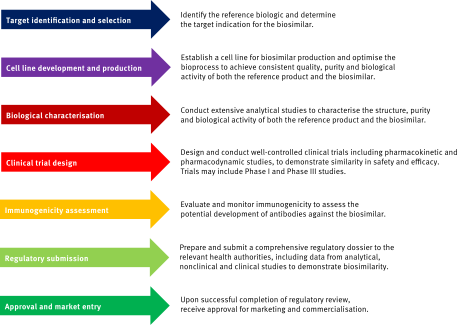
Throughout these stages, collaboration with regulatory agencies through scientific advice, adherence to regulatory guidelines and a transparent approach to demonstrating biosimilarity are essential. Sponsors must also consider factors such as intellectual property, pricing and market access strategies. Successful biosimilar development requires a multidisciplinary approach which involves expertise in biotechnology, regulatory affairs, clinical development and manufacturing.
Key CMC requirements: QTPP of the biosimilar product
The Asia-Pacific Economic Cooperation (APEC) has published guidelines on the development of biosimilars, which includes a section on quality target product profile (QTPP).[12] The guidelines states that the QTPP should be quantitative (where relevant), derived from analysis of a sufficient number of reference product lots, and other relevant information. The QTPP, aligned with ICH Q8, should be established at the outset of development in order to inform cell line and process development.
The strength(s) and presentation(s) of the reference product (RP) should be considered when choosing strength and/or presentation, especially if there are multiple reference product doses and/or presentations (vial, PFS, etc.). Ultimately, the QTPP should link to target acceptance criteria for the stepwise biosimilarity exercise. Clarity on the relationship between the target acceptance criteria and the QTPP is required. The QTPP identifies attributes most relevant to biosimilarity, facilitates development of meaningful target acceptance criteria for biosimilarity and ensures a meaningful analytical assessment.
Analytical similarity
Analytical similarity is a crucial aspect of the biosimilar development process. The ICH guidance provides a good summary of the approach sponsors should take and this is particularly crucial in APAC region, where most national guidance does not explicitly outline the specifics of analytical similarity.
Criticality of CQAs
CQAs are an essential aspect of biosimilar development. The reference product has certain characteristics that can impact safety, potency, pharmacokinetics and overall quality. All agencies, including those in the APAC, have a keen interest in the sponsor’s CQA assessment of their biosimilar.
The QTPP and CQA are two important concepts in the development of a biosimilar. The QTPP should form the basis for the biosimilar development, while the CQA defines a physical, chemical, biological or microbiological property or characteristic of the protein. These characteristics must be within an appropriate limit, range or distribution to ensure the desired product quality.[13]
For the biosimilar, the quality attributes, except for process-related impurities must align strongly with that of the reference product. These CQAs include, but are not limited to, structural attributes, glycosylation patterns, post-translational modification, size heterogeneity, charge heterogeneity, biological activity and stability. These properties are often critical for maintaining the therapeutic equivalence of the biosimilar.
The identification of CQAs typically takes place during the first stage of biosimilar development. Appropriate statistical approaches may be chosen to set the acceptance criteria for the biosimilar product to hit, based on the characterisation results for the reference product. The QTPP identifies attributes most relevant to biosimilarity, facilitates development of meaningful target acceptance criteria for biosimilarity and ensures a meaningful analytical assessment. And then the CQA is used to ensure that the biosimilar meets the required quality standard.
Test panel and statistical approach
The test panel is a group of assays used to evaluate the similarity between the biosimilar and the reference product. The criticality of a CQA can be determined based on the abundance level for the CQA in the product and the degree of clinical impact in terms of safety and efficacy by that CQA. The statistical approach is to determine the degree of similarity between the test results from biosimilar lots and reference product lots and requires an appropriate approach (e.g. equivalence testing or quality range approach for high-criticality CQAs). For moderate- to low-criticality CQAs, or high-criticality CQAs not amenable to statistical analysis, a less stringent approach or visual comparison can be leveraged to establish similarity.
Early in the development process, the sponsor is likely to have very few originator and biosimilar lots and therefore broad ranges, meaning that results distribution is likely to be wide compared to the reference product…
It is essential that the sponsor obtains sufficient reference product lots to represent variability in the originator drug manufacturing process and provide sufficient statistical power for the analytical data comparisons. Early in the development process, the sponsor is likely to have very few originator and biosimilar lots and therefore broad ranges, meaning that results distribution is likely to be wide compared to the reference product. The sponsor should plan to include reference lots that are new and some that are old to ensure a representation spread of product age.
Stepwise characterisations
The stepwise characterisation of biosimilars involves a series of tests to identify any differences from the reference product that may have an impact upon the purity, safety and efficacy of the biosimilar candidate. The process includes analytic, nonclinical and clinical testing to evaluate the totality of evidence.[12] The foundation of biosimilar development is to demonstrate that a biosimilar is highly similar to the reference product through analytic characterisation, which tests for similarity in the following:
- primary amino acid structure
- analysis of higher-order structure using circular dichroism and nuclear magnetic resonance spectroscopies
- detection of post-translational modifications
- assessment of optimal target binding
- testing for impurities and optimal potency[12]
The choice and use of advanced analytical techniques to assess structural and physicochemical attributes are expanding all the time.
Analytical method validation
Analytical similarity forms the foundation of biosimilarity, therefore the development and qualification of the analytical method for similarity is key to any biosimilar programmes.
The choice of orthogonal (statistically independent) methods is particularly important because one test may not reflect subtle differences between an innovator and a biosimilar.[14] To determine the biological activity of a drug, bioassays are used to mimic the biological activity of the drug in vivo and are shown to be sufficiently sensitive to specific differences in the physiochemical structure. Usually, biological activity is measured through ligand-binding assays such as a standard enzyme-linked immunosorbent assays until a bioassay that is a more specific marker or indicator to the mechanism of action is developed.
In addition, secondary structure is measured by Fourier-transform infrared spectroscopy (FTIR) and circular dichroism (CD), while aggregation is measured by size-exclusion chromatography-multi-angle laser light scattering (SEC-MALS) and sedimentation velocity analytical ultracentrifugation (SV-AUC). Peptide map tandem mass spectrometry (LC-MS/MS) and electrospray ionisation mass spectrometry (ESI-MS) are characterisation methods used to investigate any variations.
The main characteristics of an analytical method required to ensure the accepted performance and reliability of analytical results including:
- selectivity
- lower limit of quantification
- response function and calibration range (calibration curve performance)
- accuracy
- precision
- matrix effects
- stability of the analyte(s) in the biological matrix
- stability of the analyte(s)
- stability of internal standard in the stock and working solutions
- stability of internal standard of extracts (under the entire period of storage and processing conditions).[15]

The ICH has recently updated its guidance ICH Q2(R2) on release method validation which recommends that it is completed prior to phase III studies.[16] The FDA has published a guidance document that provides recommendations on the validation of analytical methods for the reporting of nonclinical and clinical studies.[17] The guidance document outlines the overarching principles of bioanalytical method validation, the analytical parameters of chromatographic and ligand-binding assays, and the expectations of in-study analysis and reporting.[17] Unlike the release analytical methods, the characterisation analytical methods for similarity do not need to be validated but rather qualified and fit for purpose within the working range to ensure data integrity.
ICH Q2 for release method validation preferably prior to phase III also mentions that characterisation methods for similarity do not need to be fully validated per ICH guideline but need to be qualified fit for purpose to ensure data integrity.
Stress stability
Forced degradation and stress stability studies are conducted to evaluate the stability of biosimilars under different stress conditions (e.g. acidic, alkali, oxidation etc.) and to compare them with the reference product. The studies help to establish degradation profiles and provide a direct comparison of the proposed biosimilar product with the reference product.
Final analytical similarity package
The final analytical similarity package is a set of data and information that is submitted to regulatory authorities to demonstrate the similarity between a biosimilar and its reference product. This in turn shows that the biosimilar brings about similar therapeutic effects. The package includes analytical, nonclinical and clinical data that are used to evaluate the totality of evidence.[18]
Common CMC components in developing a biologic
Cell line development and cell bank characterisations
Cell line development is a crucial step in the production of biologics. The scrutiny should concentrate on identifying differences in post-translational modifications (PTMs). PTMs can alter the structure, function, and stability of a protein and can affect its clinical pharmacokinetics, immunogenicity or efficacy. The primary structure and the amino acid structure of the biosimilars and reference product are highly similar but their PTMs may differ.
The impact of these differences on the safety and efficacy of the biosimilar must be evaluated through extensive analytical, nonclinical and clinical studies. The profile of process-related impurities, including host-derived impurities should also be considered.
For example, common considerations in Japan include thorough characterisation of the cell lines, including identity, genetic stability and target protein expression, to ensure consistency throughout their use. The establishment of both master cell banks (MCB) and working cell banks (WCB) is crucial, with the former serving as a primary source and the latter for routine production. Rigorous quality and purity testing, including screening for contaminants and the appearance of any unexpected, external agents (ICH Q5A: Guideline on viral safety evaluation of biotechnology products) derived from cell lines of human or animal origin.[19]
The guideline outlines the need for extensive characterisation of the reference product, the establishment of specifications for the biosimilar and the use of appropriate analytical methods to demonstrate similarity between the biosimilar and the reference product and ICH Q5D.[20] (derivation and characterisation of cell substrates used for production of biotechnological/biological products). This guideline outlines the standards for the derivation of human and animal cell lines and microbial cells to be used in biotechnological/biological products).
The cell line development typically involves transfecting cells with a plasmid containing the gene of interest, selecting cells that express the protein of interest and then cloning these cells to create a stable cell line which is stored in a cell bank.[20]
The development of the manufacturing process makes use of state-of-the-art biological development technologies and highly sensitive analytical tools to systematically engineer a biosimilar molecule to match the reference product’s quality attributes that were identified in the characterisation stage…
Cell bank characterisation guidelines ICH Q5D have been implemented in Japan, South Korea, China, Taiwan and Singapore. They are a set of established protocols and procedures used to evaluate the quality and safety of the cell bank. These guidelines help the sponsor to ensure that the cells remain viable, stable, maintain their genetic and phenotypic characteristics and help (to) sponsor’s prevent contamination by microorganisms or other cell lines, which can compromise the quality of the cells and impact the safety of biologics produced from them.
Process development
The development of the manufacturing process makes use of state-of-the-art biological development technologies and highly sensitive analytical tools to systematically engineer a biosimilar molecule to match the reference product’s quality attributes that were identified in the characterisation stage. This is an iterative process where each part of the manufacturing procedure is optimised in repeating steps until the manufacturing process consistently produces a highly similar molecular structure to the reference product.
Process characterisation and validation
Process characterisation refers to the systematic and comprehensive understanding of a manufacturing process. This involves identifying and defining the critical process parameters (CPP), understanding their variability and determining how they affect the quality and performance of the final product. The goal of process characterisation is to establish a robust and well-understood process that consistently outputs products that meet the desired specifications.
Key aspects of process characterisation include:
- Determining which process parameters have a significant impact on the quality attributes of the product. These are often referred to as CPPs.
- Analysing the range of variability for each critical parameter and identifying sources of variation within the process.
- Evaluating the potential risks associated with variations in CPP and their impact on product quality. This involves using tools such as failure mode and effects analysis (FMEA).
- Conducting controlled experiments to systematically vary process parameters and understand their individual and interactive effects on product quality. Design of experiments, through consideration of one factor at a time, helps to optimise and fine-tune the process.
A continuous process verification system should be established for monitoring of CPPs to ensure that the process remains in a state of control. Continuous improvement efforts may also be implemented based on monitoring results and feedback.
Process validation is a critical step in the development of finished products. The EMA guidelines also provide for a process validation scheme that includes:
- traditional process validation
- continuous process verification
- hybrid approach
- design space verification [21]
Whereas the FDA recommends a process and product lifecycle approach to validation which only has three stages:
- process design
- process performance qualification (PPQ)
- continued process verification
The goal of PPQ is to confirm the process design and demonstrate that the commercial manufacturing process performs as expected.[22] Pilot scale batches may be used for some process validation studies if the process has not yet been set up to production scale.[21] The size of the pilot batch should correspond to at least 10% of the production scale batch.[21] For this reason, the early clinical batch size needs to be carefully considered.
Stability studies
The stability of biosimilar products is an important aspect of the biosimilar development process. Stability should be determined according to the ICH Q5C guidelines.[23],[24],[25] The stability and compatibility claims are data-driven and cannot be extrapolated from the reference product. When changes are made to the manufacturing process, the stability of the biosimilar product must be re-evaluated.
In-use stability and compatibility
Just as in any other biologic development, compatibility studies are also an essential part of the development of biosimilars. They are conducted to evaluate the compatibility of the biosimilar with the materials used in the administration of the drug such as syringes, needles and infusion bags. Compatibility studies are also conducted to evaluate the stability of the biosimilar after dilution, or reconstitution, to demonstrate that it maintains its physicochemical, biological, and microbiological functions compared to the reference product.
In-use stability refers to the physicochemical stability of a biological product during its intended period and conditions.[26] The study compares product quality in the before and after stages of handling needed for dose preparation, interim storage and administration.
Summary and conclusion
The biosimilar approval process involves scientific consultations, clinical trial application approval and a dossier review process, with a general level of similarity across the APAC region, although approval timelines vary by country. Clear scientific interactions with APAC regulatory agencies allows the sponsor to gain clarification and insights on critical biosimilar CMC requirements not clearly described in the guidance such as cell line development, process comparability, process characterisation, analytical similarity and assessment of CQAs.
This presents an opportunity for each country’s agency to acquaint themselves with a sponsor and its biosimilar development program. Consequently, these interactions facilitate in-depth discussions on rigorous comparability studies, foster collaboration on local clinical trial design, and provide ongoing scientific guidance.
In addressing the changing biosimilars landscape in the APAC region, sponsors and regulatory agencies should engage in early-phase collaboration during biosimilars product development. In particular, this collaborative effort aims to comprehend the important CMC requirements, conveyed through scientific advice. By adopting this proactive approach, companies can assure the quality of their biosimilar products and enhance their growth prospects in the market.
References
[1] Market Data Forecast (2024) Asia Pacific Biosimilars Market (2023 - 2028) Available at: www.marketdataforecast.com.
[2] Market Data Forecast (2023) Asia Pacific Biosimilars Market Research Report – Segmented By Type, Technology, Application and Country (India, China, Japan, South Korea, Australia, New Zealand, Thailand, Malaysia, Vietnam, Philippines, Indonesia, Singapore and Rest of APAC)– Industry Analysis on Size, Share, Trends, COVID-19 Impact & Growth Forecast (2023 to 2028). Available at: https://www.marketdataforecast.com/market-reports/apac-biosimilars-market
[3] Momin Z (2017) Will Asia go big in biosimilars adoption and manufacturing? L.E.K. Consulting / Executive Insights, Volume XIX, Issue 26; [cited 2020 Nov 27]. Available at: www.lek.com/sites/default/files/insights/pdf-attachments/1926_Asia_Biosimilar_adoption_manufacturing_Executive_Insights_a.pdf
[4] CDSCO (2016) Guidelines on Similar Biologics: Regulatory Requirements for Marketing Authorization in India. Available at: https://cdsco.gov.in/opencms/resources/UploadCDSCOWeb/2018/UploadAlertsFiles/BiosimilarGuideline2016.pdf
[5] China Food and Drug Administration (CFDA) Technical Guidelines for R&D and Evaluation of Biosimilars.
[6] PMDA Japan: Guideline for the Quality, Safety, and Efficacy Assurance of Follow-on Biologics https://www.pmda.go.jp/files/000153851.pdf
[7] Australia: Biosimilar medicines regulation, Version 2.2, April 2018, Therapeutic Goods Administration. Available at: https://www.tga.gov.au/sites/default/files/biosimilar-medicines-regulation.pdf
[8] Korean guidelines on the evaluation of biosimilar products, Biosimilar+Product+Evaluation+Guideline,+English+Version,+(2022.7).pdf
[9] Health Sciences Authority (2016) Guidance on Registration of Biosimilar Products, Guidance on Therapeutic Product Registration in Singapore. Available at: https://www.hsa.gov.sg/docs/default-source/hprg-tpb/guidances/appendix-15_guidance-on-registration-of-biosimilar-products.pdf
[10] The Center for Biologic Policy Evaluation. Taiwan. Available at: https://biologicspolicy.com/country/taiwan
[11] Pharmacy and Poisons Board of Hong Kong (2022) Guidance Notes on Registration of Biosimilar Products. Available at: https://www.ppbhk.org.hk/eng/files/Guidance_on_Reg_of_Pharm_Prod_Sub_en.pdf
[12] European Medicines Agency (2013) Guideline on Similar Biological Medicinal Products Containing Biotechnology-Derived Proteins as Active Substances: Quality Issues - EMA Workshop on Biosimilars. Available at: https://www.ema.europa.eu/en/documents/presentation/presentation-guideline-similar-biological-medicinal-products-containing-biotechnology-derived-proteins-active-substances-quality-issues_en.pdf
[13] K Wu, H Pan ,C Li et al. An evaluation roadmap for critical quality attributes from tier 1 in analytical similarity assessment. Plos One. Available at: https://journals.plos.org/plosone/article?id=10.1371/journal.pone.0208354
[14] Easton, Richard L. (2020) Building Orthogonality into Biosimilar Testing. BioProcess International. Available at: https://bioprocessintl.com/sponsored-content/building-orthogonality-into-biosimilarity-testing/
[15] European Medicines Agency (2011) Guideline on bioanalytical method validation. Available at: https://www.ema.europa.eu/en/documents/scientific-guideline/guideline-bioanalytical-method-validation_en.pdf
[16] ICH (2023) Validation of Analytical Procedures Q2(R2) Final Version. Available at: https://database.ich.org/sites/default/files/ICH_Q2%28R2%29_Guideline_2023_1130.pdf
[17] FDA (2018) Bioanalytical Method Validation Guidance for Industry. Available at: https://www.fda.gov/files/drugs/published/Bioanalytical-Method-Validation-Guidance-for-Industry.pdf
[18] FDA (2017) Analytical Similarity Evaluation for Tier 1 Attributes - Statistical Review and Evaluation: https://www.fda.gov/media/115402/download
[19] ICH (2023) Viral Safety Evaluation of Biotechnology Products Derived from Cell Lines of Human or Animal Origin. Available at: https://www.fda.gov/files/drugs/published/Bioanalytical-Method-Validation-Guidance-for-Industry.pdf
[20] https://database.ich.org/sites/default/files/Q5D%20 (requires login for ICH database, also https://www.ema.europa.eu/en/ich-q5d-derivation-characterisation-cell-substrates-used-production-biotechnological-biological-products-scientific-guideline)
[21] European Medicines Agency (2016) Guideline on process validation for finished products - Information and data to be provided in regulatory submissions. Available at: https://www.ema.europa.eu/en/documents/scientific-guideline/guideline-process-validation-finished-products-information-and-data-be-provided-regulatory-submissions-revision-1_en.pdf
[22] FDA (2011) Guidance for Industry. Process Validation: General Principles and Practices. Available at: https://www.fda.gov/files/drugs/published/Process-Validation–General-Principles-and-Practices.pdf
[23] ICH (2011) Q5C Stability testing of Biotechnological / Biological products ICGH CGC ASEAN training. Available at: https://admin.ich.org/sites/default/files/inline-files/SESSION_Ia_ICH_Q5C.pdf
[24] EMA (2014) Guideline on similar biological medicinal products containing biotechnology-derived proteins as active substance: quality issues (revision 1): Available at: https://www.ema.europa.eu/en/documents/scientific-guideline/guideline-similar-biological-medicinal-products-containing-biotechnology-derived-proteins-active-substance-quality-issues-revision-1_en.pdf
[25] ICH (1995) Quality of biotechnological products: Stability Testing of biotechnological/biological products. Available at: https://database.ich.org/sites/default/files/Q5C%20Guideline.pdf
[26] Blumel M, Liu J, Jong I et al. (2023) Current Industry Best Practice on in-use Stability and Compatibility Studies for Biological Products. Journal of Pharmaceutical Sciences, Vol.112 Issue 9. Available at: https://www.sciencedirect.com/science/article/abs/pii/S0022354923001909